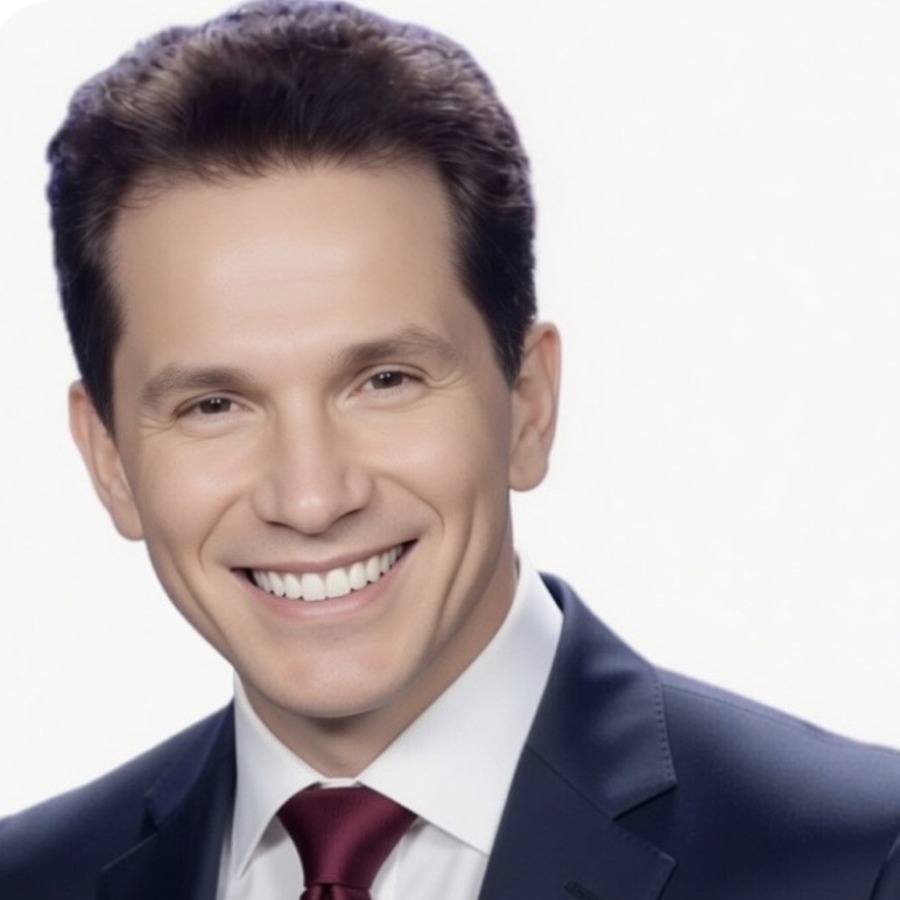
Milwaukee catcher William Contreras won the 2026 World Series MVP award with his bat, his arm and a gesture that no regular-season major league game had allowed a year earlier: a tap on the helmet that sends an umpire's call to a camera for review. He challenged 13 ball and strike calls in the Series and won 10. "It's just magic," he said.1
For the first time in Major League Baseball history, players could overrule the strike zone. The first season of the experiment produced more than 10,000 challenges, a new kind of strategy and a World Series decided in part by who used it best.
How the challenge works
MLB calls it the Automated Ball-Strike Challenge System, or ABS. The home plate umpire still calls every pitch. If the pitcher, catcher or batter disagrees, he taps his cap or helmet and calls for a challenge. Twelve Hawk-Eye cameras around the ballpark track the pitch and determine whether it crossed the zone.2 No one else may challenge, not even the manager.3
Each team starts the game with two challenges. A team keeps a challenge when it wins and loses one only when the umpire's call stands.23 The zone itself now fits each hitter: its top sits at 53.5 percent of the batter's height, its bottom at 27 percent, and its width matches the 17 inches of home plate.2
A century of arguing balls and strikes
The strike call has always belonged to a person. Bill Klem, an umpire who worked a record 18 World Series, introduced the arm signals for strikes and fair and foul balls. In 1953 he became one of the first two umpires elected to the Hall of Fame.4
Technology entered the game slowly. On August 26, 2008, MLB approved instant replay for home run calls only, and it first used replay in a regular-season game on September 3, 2008.5 In 2014, the 30 clubs unanimously expanded replay and gave managers challenges of their own, capped at two per game.6 Balls and strikes remained off limits.
Testing in the minors
MLB tested the idea in the minor leagues first. The independent Atlantic League used fully automated calls in 2019. The Florida State League then tried the challenge version, and Triple-A tested both versions in 2023 and 2024. By the end of 2024, the challenge format had won out.3
In 2025 Spring Training, teams averaged 4.1 challenges per game, each review took 13.8 seconds on average, and 52.2 percent of challenges overturned the call.3 The system debuted on a national stage at the 2025 All-Star Game in Atlanta.7 On September 23, 2025, MLB's Joint Competition Committee of owners, players and an umpire approved it for 2026. Commissioner Rob Manfred cited the players' strong preference for the challenge format over full automation.2
Opening Day firsts
The first challenge in major league history came on March 26, 2026. Yankees shortstop José Caballero challenged a strike call from Giants starter Logan Webb at Oracle Park, and the call stood. "I wanted to go for it," Caballero said.8
The first successful challenge came the same day. With a full count, Mets catcher Francisco Alvarez challenged a ball call against Pittsburgh's Oneil Cruz. The replay turned the walk into a strikeout, and the Mets went on to win 11-7.9
The first full season
By the end of the regular season, players had made 10,557 challenges and overturned 5,686 calls, a success rate of 54 percent. Fielders won 58 percent of their challenges. Batters won 49 percent.10
Players learned the rules fast. A challenge must come within two seconds of the call. Early in the season, catchers led the league in success rate and pitchers trailed, which led one MLB analyst to a blunt guideline: "Pitchers should never challenge."11
The postseason raised the stakes. After Dodgers outfielder Andy Pages lost a challenge in Game 1 of the NLDS against Atlanta, manager Dave Roberts told him to stop challenging for the rest of the playoffs.12
The first ABS World Series
The 2026 World Series between Milwaukee and Tampa Bay was the first played with the challenge system. Not every player embraced it. Rays first baseman Yandy Díaz went through 59 regular-season opportunities without a single challenge. "I need a hit, not a challenge," he said.13
Contreras took the opposite approach. He led the majors with 185 regular-season challenges, 49 more than anyone else, and won 57 percent of them. "I'm not afraid to lose my challenge," he said. "I trust my pitcher."14
In the Series, he hit 8-for-21 with four RBIs, threw out four of nine runners trying to steal, and won 10 of his 13 challenges. "How he does the ABS thing, I don't know," said Brewers manager Pat Murphy.1 The Rays won a 12-inning Game 4 to cut Milwaukee's lead to three games to one.15 The Brewers clinched the title the next night with a 4-1 win at Tropicana Field, behind 5 2/3 scoreless innings from Jacob Misiorowski. Rookie Cooper Pratt collected six straight hits, a World Series rookie record.16
The umpire still makes the call. Now the players can make him prove it.
Notes
- Establishes William Contreras's World Series MVP award, his 8-for-21 hitting with 4 RBIs, his 10 of 13 successful World Series challenges, his 33 postseason challenges at a 67 percent overturn rate, and the quotes from Contreras and Pat Murphy. MLB.com, William Contreras wins 2026 World Series MVP, October 29, 2026
- Establishes the September 23, 2025 approval by the Joint Competition Committee, the two-challenge rule, the retention of successful challenges, the helmet or cap tap, the 12 Hawk-Eye cameras, the height-based strike zone and the players' preference for the challenge format. MLB press release, September 23, 2025
- Establishes that managers cannot challenge, that a team loses a challenge only when the call is confirmed, the minor league testing history, and the 2025 Spring Training results. MLB.com, ABS Challenge System explainer, April 13, 2026
- Establishes Bill Klem's introduction of arm signals for strikes, his record 18 World Series and his 1953 Hall of Fame election. National Baseball Hall of Fame, Bill Klem
- Establishes the August 26, 2008 decision to use replay for home run calls, the first use on September 3, 2008, and the 2026 start of the ABS Challenge System. MLB, Official Umpire Timeline
- Establishes the unanimous 2014 approval of expanded replay and the limit of two manager challenges per game. MLB.com, January 16, 2014
- Establishes the use of the challenge system in the 2025 All-Star Game at Truist Park. MLB.com, July 15, 2025
- Establishes Jose Caballero's first ABS challenge in a major league game, its result, and the quotes from Caballero and Logan Webb. MLB.com, March 26, 2026
- Establishes Francisco Alvarez's first successful ABS challenge, the strikeout of Oneil Cruz and the Mets' 11-7 Opening Day win. MLB.com, March 26, 2026
- Establishes the 2026 regular season totals of 10,557 challenges, 5,686 overturned calls, a 54 percent overturn rate, and the split between batters and fielders. Baseball Savant, ABS Dashboard, 2026 regular season
- Establishes the two-second challenge window and early-season success rates by position. MLB.com, April 3, 2026
- Establishes Dave Roberts's decision to stop Andy Pages from challenging during the postseason after a missed challenge in the NLDS. MLB.com, October 5, 2026
- Establishes the 2026 World Series as the first with ABS, Yandy Diaz's refusal to challenge and his quotes. MLB.com, October 21, 2026
- Establishes Contreras's league-leading 185 regular-season challenges, his 57 percent overturn rate and his quotes on challenging. MLB.com, October 28, 2026
- Establishes the Rays' 12-inning Game 4 win and the Brewers' 3-1 series lead. MLB.com, World Series Game 4
- Establishes the Brewers' Game 5 clincher, a 4-1 win at Tropicana Field on October 28, 2026, Jacob Misiorowski's scoreless start and Cooper Pratt's six straight hits. MLB.com, Brewers win 2026 World Series
The views expressed are the author’s own and are offered as general commentary. They do not constitute legal, tax, investment or accounting advice.